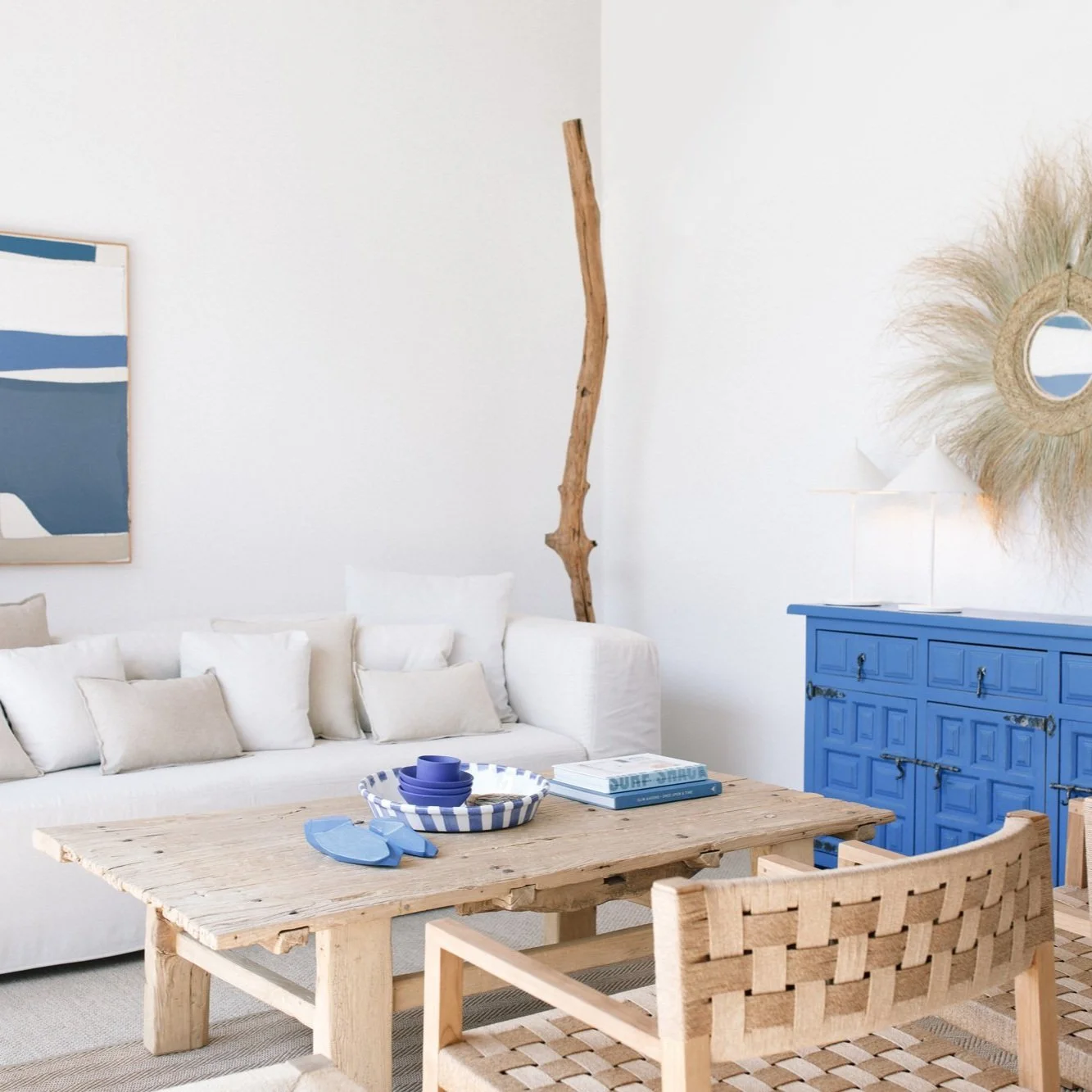
The Castilian Furniture
Born in the middle of the 20th century, at a time when artistic trends were seeking the splendour of past centuries.
Enter almost any villa in Jávea and you will find it: a piece with an enigmatic smell, a traditional texture, a dark walnut tone that contrasts with the immaculate white walls. Chests, chairs, tables, consoles, headboards — all finished with black iron handles. This is Castilian furniture, and it is everywhere.
It emerged in the 1960s as a stylistic response to the construction of second homes for vacationers arriving mainly from Madrid. Throughout the decades that followed, it furnished villas across every neighbourhood — Montañar, Arenal, Cap Martí, Adsubia, Montgó — becoming the default aesthetic of a certain kind of Mediterranean leisure.
The style draws its inspiration from Spanish Empire designs of the 16th century, and from the austere grandeur of Castilian palace interiors. This distinguishes it from Aragon's more ornate, Mediterranean-inflected aesthetic — Castilian furniture is heavier, darker, more deliberate in its severity.
For many years it was considered second-class: reviled, peculiar, associated with the ephemeral summer stay rather than with any real home. People removed it, replaced it, hid it in storerooms. But tastes shift. Restored and placed with intention, these pieces carry a cultural weight that newly made furniture simply cannot replicate. They are documents of a specific moment in the social history of Jávea — and they deserve to be recognised as such.